Category: Types of Influences

  • Chasing Experiences: What My Visit to Ben’s Brain Taught Me

    Chasing Experiences: What My Visit to Ben’s Brain Taught Me

    [TL;DR: A reflection from a university student on the power of influences and how a recent experience at an escape room The Trip: What Happened in Larspura unlocked new perspectives when it came to drugs and her value to stay open-minded.] 

    University felt like a huge step-up. The campus was huge, cross-faculty learning was invigorating, and some personalities were larger than life. Having settled in, at 21, my resolution was to be fearless and to live fully. A friend that I had gone on exchange programme with signed us up for an experience at “Ben’s Brain”, one of three immersive escape rooms that ran at the Stamford Arts Centre. I left this experience with renewed perspectives.


    A Journey Through a Fractured Mind
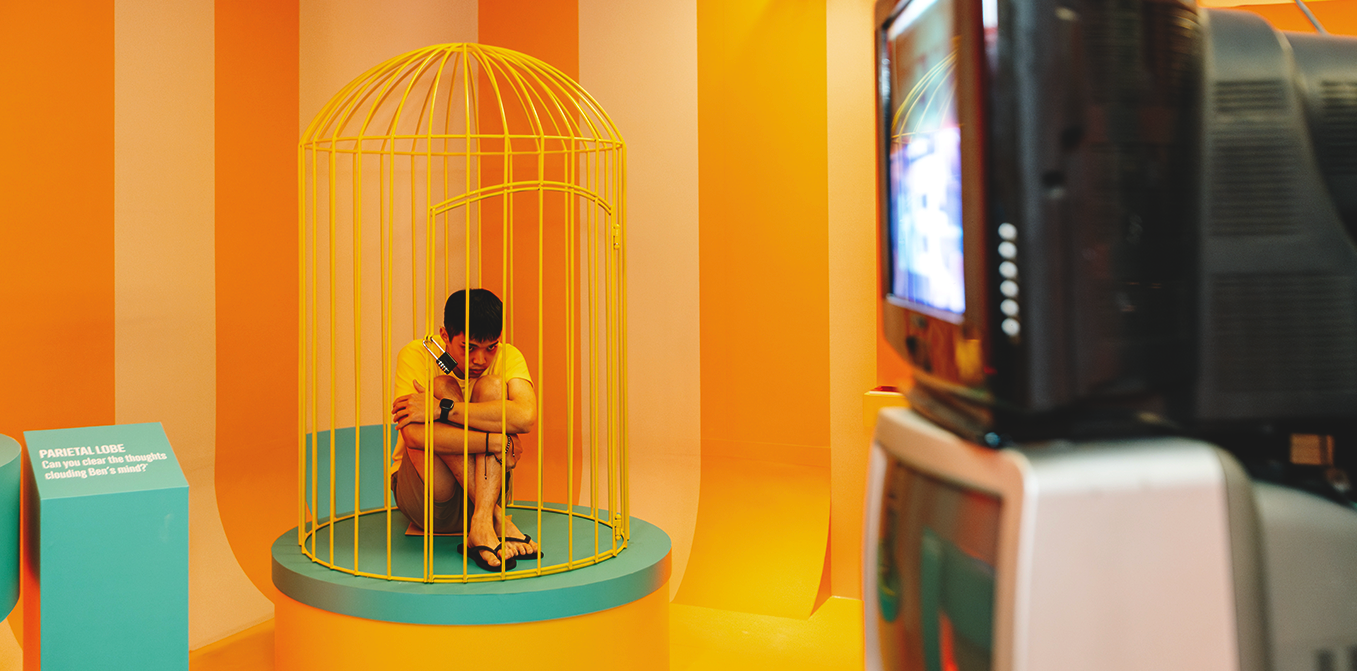
    Photo taken from “The Trip: What Happened in Larspura?” On-ground Activation

    My visit to Ben’s Brain started out as a playful experience but I soon realised the escape room was much more than a game, it was a deep dive and reflection on all the vulnerabilities we share.  It was a game designed to reveal how our brains take in a variety of influences we experience – and how one’s views and actions might change in the face of new experiences when we lose sight of what we truly value.   

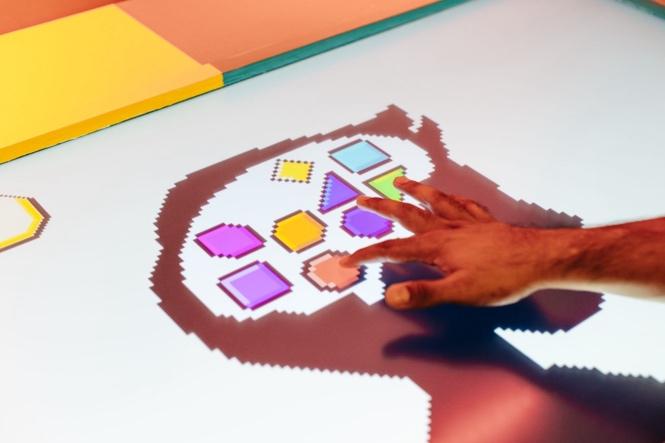
    Stepping into Ben’s Brain felt like entering a surreal labyrinth of puzzles and personal history. The escape room’s design was clever: it challenged participants to witness and piece together Ben’s life and in doing so solve four distinct puzzles that represented four different parts of the brain. I loved the frontal lobe game which was modelled after the higher-level cognitive functions such as decision-making that our frontal lobe engages in. The decision-making game underscored how easily our choices can be hijacked. The different puzzles in the room,  reflected the real-life impact that influences have on us and how they can change our views to be receptive to drugs. As we scrambled to piece together clues, I couldn’t help but draw parallels to my own experiences. 

    Photos taken from “The Trip: What Happened in Larspura?” On-ground Activation

    My Déjà vu Experience

    I had spent considerable time on an overseas exchange and resonated with Ben’s story where an overseas trip turned into a chase for a novel experience. Sometimes, it created harmless fun and even led to eye-opening experiences (Think building your own house with your own hands. Imagine doing that in cosmopolitan Singapore). Other times, it meant playing with fire including joining drug-fuelled raves and toying with the idea of trying them in countries where drugs are legalised. After all, whatever happens overseas, stays overseas. Right? And according to news reports, I was not alone in feeling this way. In 2022, at least 41 Singaporeans and PRs were arrested for drug abuse overseas.1 Thankfully, I had friends who reasoned with me and we stayed away from drugs. 

    On hindsight, it could have gone down a slippery slope. What if my friends stayed silent, worried about either offending me or appearing close-minded? Would that have changed my decision? The pressure and fear of missing out are real challenges that could affect anyone regardless of age. Being a foreign exchange student could be a lonely experience due to language or cultural differences. Some could feel the pressure to explore uncharted territory such as trying drugs to avoid being shunned, since recreational drug use could be legalised and normalised in those countries. The conundrum could be very real, leading even those who had never considered drugs back home to struggle with the decision of whether they should give in to temptation. 

    Final Reflections

    Studies have shown that more than earlier cohorts, my generation has a greater openness to experimentation and capacity for diversity.2 Being open-minded can help us to grow along with new experiences – the good, bad and ugly. And that’s okay, if we are grounded in our values

    But we could waver in situations where lines are blurred or we feel pressured to act. In these situations, can we stay true to what we value while mollifying that fear of speaking up?

    What began as a game evolved into a sobering lesson on the types of influences in our lives and what it fundamentally means to be open-minded. Ben’s Brain wasn’t just an exhibit—it was an experience that prompted us to question our personal experience, our vulnerabilities, while considering the things we truly value in life. 

    Reference Articles:
    1 Stopping drugs: How Singapore screens travellers arriving at Changi Airport
    2 Generation Z characteristics and its implications for companies | McKinsey

  • Navigating Peer Influence: Finding Your Path

    Navigating Peer Influence: Finding Your Path


    [TL;DR: Peer influence is powerful—sometimes in ways we don’t even realise. They can change our values and the way we behave sometimes for good but also sometimes for the worse. A strong understanding of what we value in life can help us to navigate through negative peer influence.]

    The Science Behind Fitting In

    (Photo taken by Joshua Tsu on Unsplash)

    You may be tempted to think this peer pressure only happens to certain types of people or in specific situations. But science tells us that this desire to conform and to fit in, is not only common but part of human nature. Whether it’s the Asch Conformity Experiments or Social Identity Theory, behavioural psychology has proven without a doubt that all humans desire to fit in and be accepted by their social group.1 To be accepted, we could adopt the norms, values and behaviours of the in-group, but at what cost?

    Peer pressure’s not all bad. Think about the fitness trends that have encouraged people to get together in groups to exercise. That’s the power of group-think used for something good. Simply engaging in healthy activities together as a group could foster camaraderie and a sense of belonging, and boost motivation: in the case of exercise, studies have shown that group-workouts are more effective in improving quality of life and reducing stress levels than individual workouts.2 This is one scenario proving that peer influence can be used for good. We often find purpose when we feel that we have a vital/irreplaceable role to play in a group setting and our self-worth is boosted.

    However, there are always two sides to a coin, and peer pressure can be a negative force, inevitably forcing us to pick a side especially when there is conflict between our personal values and the group’s values.

    Findings from the 2025 Uninfluenced campaign survey revealed that 62% of youths in Singapore would feel pressured by their peers to try drugs at social events even if they did not want to.3  

    Have you heard these utterances before?

    “What happens in (place name), stays in (place name)”  “Come on, just try everything once”

    Soundbites from CNB’s escape room event 4

    If it sounds familiar, you might have heard or used it when hanging out with friends. At times, they could be harmless utterances that encourage us and our friends to let loose and even benefit. However, what about during situations where someone is in danger of abusing drugs? These seemingly harmless utterances can form part of peer pressure by invalidating the listeners’ values.

    Drug abuse can start because of curiosity. Add on peer pressure, playing on the the desire to fit in, or just not wanting to be the odd one out and as one former drug abuser shared, it can quickly spiral into something much harder to escape.

    The Slippery Slope of Peer Pressure

    (Photo taken by Tan Kaninthanond on Unsplash)


    It all began with a simple hangout at a friend’s house, said John (not his real name).

    “I was curious. My friends didn’t even want me to try at first, but I insisted,” he admitted. Over time, that curiosity grew into something else, a need to belong. As his friends experimented with more substances, he felt left behind.

    “They told me Ecstasy was way better than Meth, so I joined in. I didn’t want to feel left out.”

    For many, drugs are about rebellion. For others, it is about finding belonging. And the pressure isn’t always direct. Sometimes, it’s the fear of losing friendships. Other times, it’s the taunts:

    “My friends kept calling me ‘xiasuay’ (embarrassing) if I didn’t try it. When you’re in a tight-knit group, ‘face’ matters.”

    Even the strongest resolve can be eroded when it comes to the influence of peer pressure. The desire be part of a group can erode even the resolve of the strongest especially when the pressure comes from those who matter the most to you. However, a strong understanding of what we value in life can help us to navigate these influences.

    Reference Articles:
    1 Asch Conformity Experiments : What These Experiments Say About Group Behavior.
    2 Researchers Find Group Exercise Improves Quality of Life and Reduces Stress Far More Than Individual Exercise.
    3 The online survey was conducted from 12-20 January 2025, with a total sample size of n=500. The target respondents were aged 15-25 across various demographics to ensure a representative sample of the general youth population. The study focused on two key profile groups: n=150 youths in secondary schools and n=350 youths in post-secondary education, including recent graduates from local institutions.
    4 Soundbites taken from CNB’s escape room event, The Trip: What Happened in Larspura.