
[TLDR: Shared experiences are powerful. They bond us, define our friendships, and help us feel like we belong. But when the desire to experience something together outweighs rational consideration, our judgement can blur, especially when everyone else seems on board. We start to rationalise risky activities because the group’s collective participation makes them feel safer than they actually are, while creating stronger bonds through shared risk-taking. The question is: when does belonging start costing more than it’s worth and how do we still find our own voice and place within the group?]

Why Shared Experiences Matter So Much
From binge-watching the same show, travelling together, joining the same co-curricular activities (CCAs), to chasing the same trends – shared experiences are social glue. They give us inside jokes, common memories, and a sense of “this is who we are.”
It’s no accident as our brains are wired this way. Psychologically, shared experiences are crucial for forming our identity and sense of belonging. In fact, a MIT study found that we crave social interactions in the same brain regions where we crave food, and another study showed that social exclusion lights up the same brain areas associated with physical pain.1
This desire to belong feels especially essential during our teens and twenties. A study found that adolescents, especially early adolescents, adjust judgments about risk more to match the opinions of peers than adults, suggesting that the desire to align with peers can shape decisions and may increase susceptibility to risky behaviour.2
Saying “yes” often feels easier than being the one who opts out. And most of the time, that’s harmless. Until it isn’t.
When “Everyone’s Doing It’ Becomes the Point
Sometimes, the experience itself matters less than the fact that it’s shared. We see this play out in many ways:
- Orientation camps where hazing is framed as a rite of passage to “earn your place” in a group
- Friend groups normalising unhealthy behaviour as part of group identity or a “character-building arc”
- Overseas trips or exchange programmes where “freedom” becomes synonymous with being indiscriminately open to all kinds of experiences – because that’s what people do there
In online spaces too, these narratives are reinforced. Digital validation creates a feedback loop: the more these stories are shared and celebrated online, the more they are normalised as “expected milestones” rather than a matter of personal choice.
How Risks Gets Rebranded as a Shared Moment
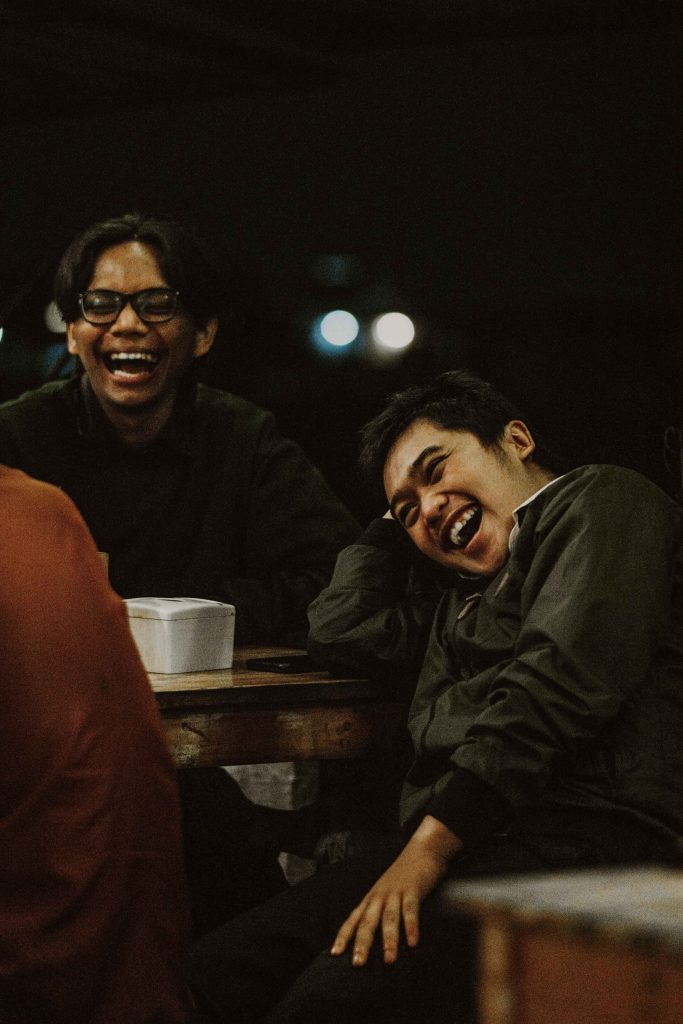
This is where influence gets subtle. Within a group, risk is rarely presented as risk at all. Instead, it is softened, reframed, and redistributed until it feels almost manageable.
Social proof plays a central role: when “so many people have done it and they’re fine,” danger feels theoretical rather than real. Collective reassurance follows closely behind: “We’re all in this together, nothing will happen!” – creating a sense that safety comes from numbers, not choices. The act itself is then reframed, shifting focus away from the substance or behaviour and toward the experience. People around you can say it’s not about what’s being taken, but about who you’re with and the memories you’re making. Even the language changes. What might objectively be drug abuse becomes “just experimenting,” “just once,” or “all in the name of fun,” stripping away the danger of engaging in such risky behaviour through softer, more playful words.
When doubts surface in these moments, they are rarely met with facts or critical discussion. Instead, they are smoothed over with a promise of belonging.
The time and place of these conversations also play a huge role. When these conversations happen in casual, high-energy, or socially charged moments, risk feels lower – not because it is, but because responsibility is shared. Saying no can feel like breaking the shared story everyone else is excited to tell. And in those moments, the fear of social disconnection often outweighs the perceived risk itself.
Learning to Spot Influence
The truth is, we cannot and don’t need to fight the desire for shared experiences.
What matters is learning to pause and recognise when that desire is being manipulated by checking in with yourself:
- “Am I genuinely excited about this experience, or am I just afraid of feeling left out?”
- “Are risks being joked away or properly acknowledged?”
- “If something goes wrong tonight, will I be able to live with my role in encouraging this?”
- “Is anyone in our group feeling pressured to prove something right now?”
Influence doesn’t always shout. Sometimes it shows up as laughter, reassurance, or a simple “don’t be so uptight.” Recognising it doesn’t make you difficult, it makes you aware.
Redefining What We Choose to Share
Shared experiences are powerful. That’s exactly why they deserve more thought, not less. TikTok culture glorifies “exercising free will to the fullest” to rationalise making questionable decisions while fully aware that they’re questionable. We should ask: are we exercising genuine free will here, or just following a script that the culture of the day has fashioned for us?
When friends truly look out for one another, belonging isn’t about going along, but about speaking up, redirecting negative influence, and choosing what’s best for the group.
We can still travel, explore, and grow together while shaping moments that create connection without unnecessary risk. When each person actively participates in the thinking, using our influence to foster positive social norms, shared experiences reinforce strong values, strengthen the group, and build genuine bonds that last.